This summer, the impact of Denver Children’s Advocacy Center reached far beyond Denver.
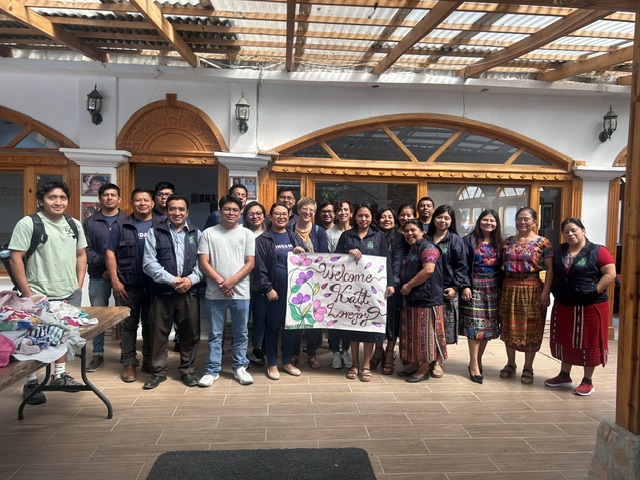
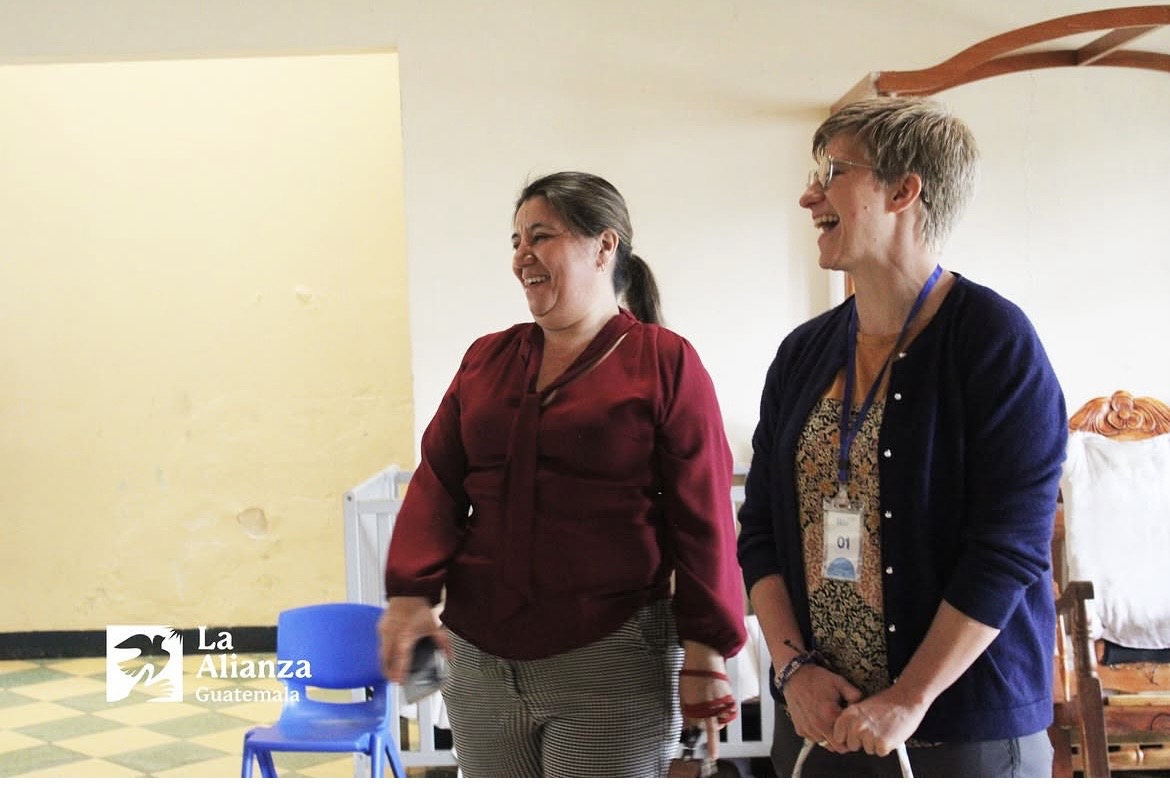
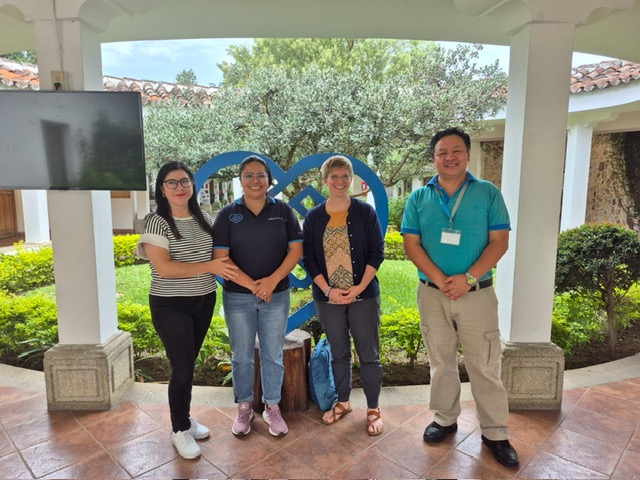
In July, DCAC Bilingual Community Connector Katt Lovejoy returned to Coatepeque, Guatemala, where she continued a volunteer project helping local facilitators provide children and families with education about safety and child abuse prevention at Trifinio Center for Human Development.
It was Katt’s second trip to the community and the continuation of a partnership that began right here in Denver.
A Denver Connection Leads to Guatemala
The project grew organically out of Katt’s work providing DCAC’s Safe From the Start prevention programming at Escuela de Guadalupe in Denver.
There, Katt connected with school social worker Claudia Luna Asturias, who is originally from Guatemala. Claudia and her husband, Edwin, a physician at CU Anschutz, have longstanding connections to Coatepeque. Edwin helped establish a medical clinic serving workers and families in an agricultural community there as part of a global medicine program that also provides opportunities for physician assistants to complete clinical rotations and strengthen their practical Spanish skills.
Through her work in the community, Claudia began providing sexual health education, and her program became a trusted source of information for local families. But she and others began noticing a significant gap: children and families also needed age-appropriate education about child abuse, body safety, boundaries, and how to seek help.
The need was especially urgent. Health professionals working with pregnant adolescents were seeing girls as young as 12 who were already pregnant. Recognizing the need to reach children earlier, nurses and other community members began calling for prevention education designed for younger ages.
Claudia knew someone who could help.
Sharing What Works
In 2025, Katt traveled to Coatepeque for the first time, using her experience at DCAC to help develop a child safety and abuse prevention curriculum adapted for the local community.
The goal wasn’t simply to bring a Denver program to Guatemala. It was to share the knowledge and principles behind DCAC’s prevention work while listening to local partners who understood their community, culture, families, and needs.
Effective prevention depends on trust. Claudia had already built relationships within the community through her sexual health work, and local nurses and families themselves had identified the need for more education. Katt could bring her expertise in child abuse prevention, but local partners could help determine how that information would be most meaningful and useful in Coatepeque.
The program also included parents. Families were invited to learn what their children were being taught so they could reinforce the same messages and continue conversations about safety at home.
For some parents, having a trusted educator begin those conversations made an enormous difference. Some parents specifically named the ways that this curriculum could be helpful to their youth. They commented on specific topics that could be addressed with their youth, based on their knowledge of their kids and the community.
From Teaching to Building Local Capacity
When Katt returned in July 2026, the work entered a new phase.
Rather than primarily delivering the curriculum herself, Katt focused on coaching local facilitators and modeling how to teach the material. As they become comfortable leading conversations about abuse prevention, the program can continue reaching children and families long after her visit ends.
“It’s an honor to work alongside the facilitators who are having these important conversations with young people in Coatepeque. Just like in the United States, much of the fight against abuse begins with talking about it. So, it’s really chilero – ‘he Guatemalan word for ‘cool’ – to be a part of this in Guatemala, too.”
— Katt Lovejoy, DCAC Bilingual Community Connector
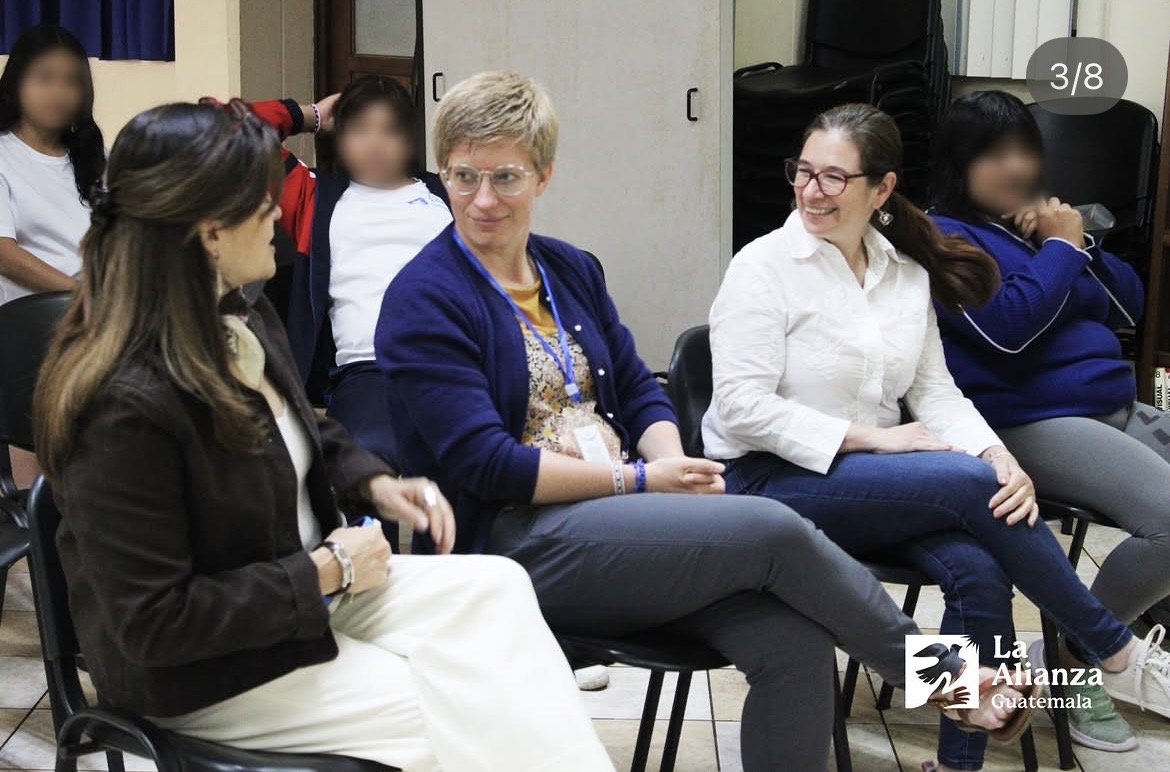
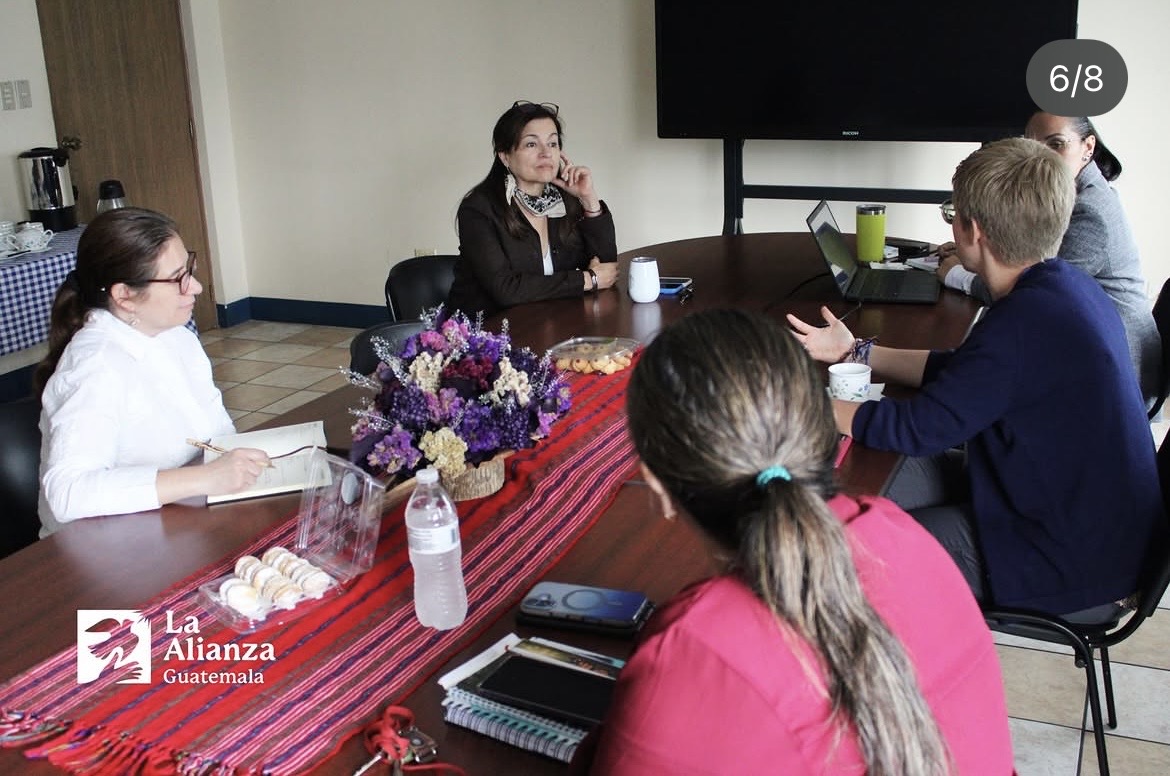
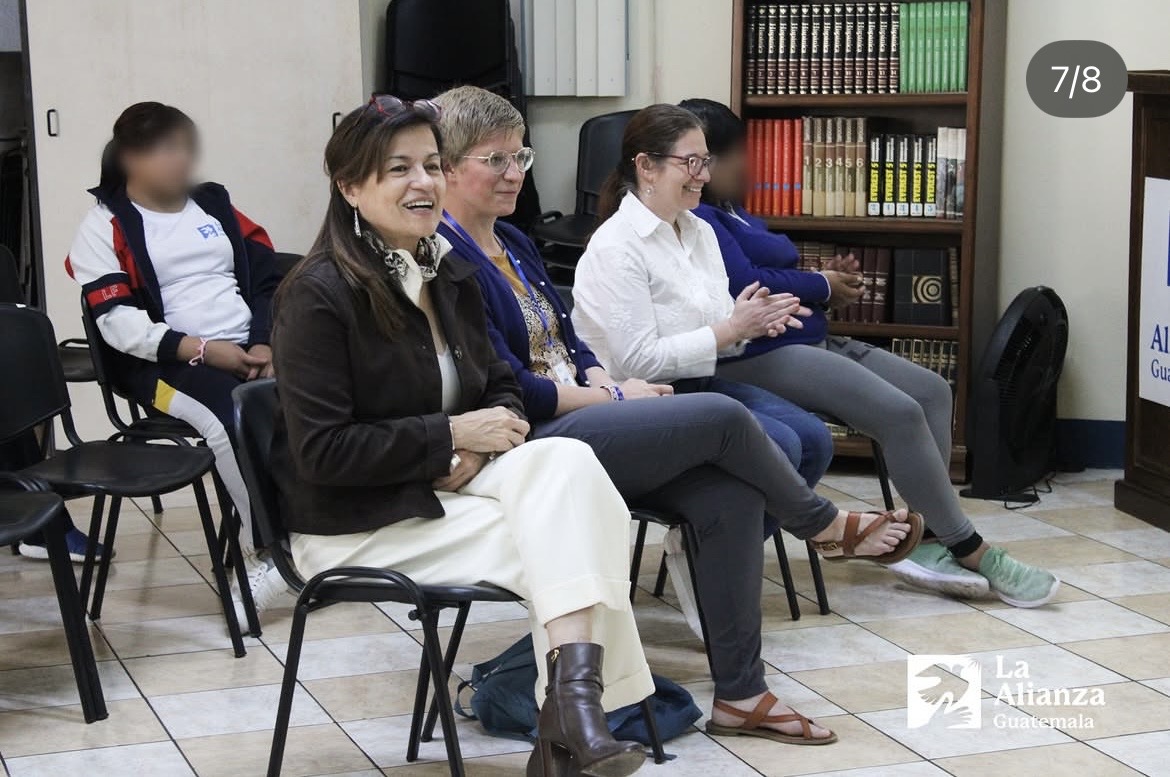
During this year’s trip, Katt also connected with additional organizations interested in continuing to spread awareness, creating opportunities for the work to reach even more families.
Katt meeting with partners from Fundamaya
Prevention Is a Community Effort
The experience went beyond simply sharing DCAC’s expertise. It has also created opportunities for mutual learning.
Working alongside Claudia, local facilitators, health professionals, families, and community organizations has given Katt new perspectives on questions that matter in Denver, too: How do you start the conversation around a difficult subject? How do we talk about prevention on the communities’ terms, rooted in their knowledge and experience? How do you partner with trusted community leaders to carry prevention messages forward?
Those lessons can strengthen prevention efforts on both sides of the border.
The project also reflects one of the central ideas behind DCAC’s Community Outreach and Prevention work: preventing child abuse requires communities where adults are prepared to have conversations about safety.
Sometimes those conversations happen in a Denver classroom. Sometimes they happen thousands of miles away in Guatemala.
But in both places, change begins when trusted adults give children the language to understand their boundaries, recognize unsafe situations, and know that there are people they can turn to for help.
Katt’s travel and volunteer work in Guatemala were self-funded. DCAC supported the effort by allowing Katt to dedicate a portion of her staff time to sharing her professional expertise and helping build local capacity – a small investment with the potential for an impact that extends far beyond Denver.
And perhaps that’s the most powerful part of the story: knowledge shared in one community doesn’t have to stay there. When it is placed in the hands of trusted local leaders, it can keep traveling.
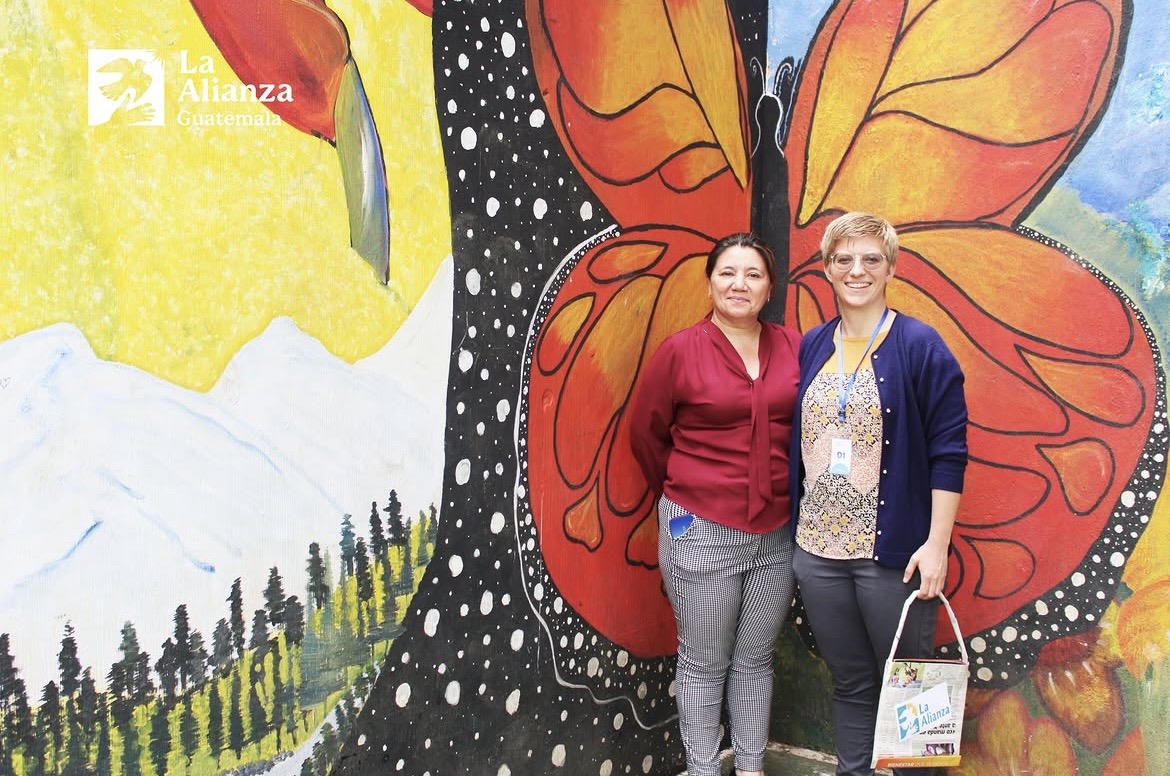
Katt also met with partners from La Alianza, Familias de Esperanza, and ChildFund