At Denver Children’s Advocacy Center (DCAC), prevention is at the heart of everything we do. While we are here for children and families in the most difficult moments, we are equally committed to stopping abuse before it happens – by equipping kids, caregivers, and trusted adults with the tools to recognize, prevent, and respond to unsafe situations.
Through our prevention programming, we are building safer communities one school, one classroom, and one conversation at a time.
Reaching Kids Where They Are
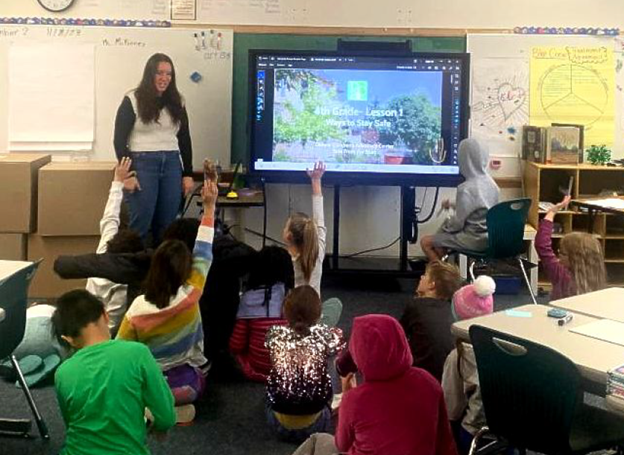
Every year, DCAC partners with 19 – 23 schools across the Denver area, reaching approximately 5,000 students annually, primarily between the ages of 3 and 10.
Schools are one of the most powerful places to do this work. They are where children consistently show up, where learning is already happening, and where trusted relationships are built every day. By partnering with schools, we can reach children early – before harm occurs – and provide them with age-appropriate tools to understand their bodies, boundaries, and safety.
Our school partnerships are strong and often long-standing. Many schools invite us back year after year, and new partnerships often grow through word of mouth – teachers, counselors, and therapists who have seen the impact of our work bring it with them when they move to new schools. We also aim to build about five new school partnerships each year to expand our reach.
As a proud community partner with Denver Public Schools, we are deeply embedded in the ecosystem of support surrounding children and families.
Building Skills That Grow with Children
Prevention starts as early as possible – because the earlier children have the language and confidence to understand their boundaries, the more prepared they are to stay safe and speak up.
Using the Committee for Children’s Second Step curriculum, our team delivers lessons through storytelling, helping children engage with concepts in a way that feels accessible and relatable. While the core themes remain consistent – body safety, trusted adults, boundaries – the messaging evolves as children grow.
For younger children, lessons focus on simple, body-based safety skills. As children get older, those conversations expand into more complex ideas about relationships, consent, and real-world situations. This layered approach ensures that prevention education grows alongside the child.
Supporting Caregivers as Partners in Prevention
Prevention doesn’t stop at the classroom – it extends into the home.
Each year, DCAC reaches approximately 500 caregivers through trainings, consultations, and school-based engagement like back-to-school nights. Our caregiver training, How to Talk with Kids About Abuse Prevention, helps families understand what children are learning and gives them the tools to continue those conversations at home.
This alignment between school and home is critical. When children hear consistent messages from trusted adults in all parts of their lives, those lessons become stronger and more meaningful.
Caregivers consistently tell us how impactful this support is:
“This training gave me the exact words I didn’t have before. I feel more confident talking to my child about boundaries and safety in a way that doesn’t scare them.”
“I really appreciated how practical it was. I left with simple things I can actually use at home.”
“It reminded me how important it is that my child knows I will always listen and believe them.”
“I’m so grateful this is happening at my child’s school. It makes it easier for our whole family to be on the same page.”
Empowering Educators and School Staff
Teachers and school staff are often on the front lines – they are trusted adults who children turn to, and they play a critical role in recognizing and responding to concerns.
DCAC provides training to approximately 400 school staff each year, including:
- Program overviews so educators understand what students are learning
- “Signs and Symptoms of Abuse and Neglect”
- Trauma-informed care practices
These trainings are designed to build confidence and clarity – so that when a child shares something concerning, staff feel prepared to respond appropriately.
Educators tell us:
“This training deepened my understanding of how abuse can present in the classroom and what to look for.”
“I feel much more confident in how to respond if a child shares something concerning.”
“I feel more comfortable using correct language and having conversations about boundaries and safety with students.”
“Having DCAC partner with our school has been incredibly valuable. It feels like true support, not just a one-time training.”
A Community Effort
Prevention is not a one-time lesson – it’s an ongoing, community-wide effort.
By working alongside schools, caregivers, and educators, DCAC is helping create environments where children feel safe, heard, and supported – and where adults are equipped to take action when something doesn’t feel right.
Because when we invest in prevention, we’re not just responding to harm – we’re helping ensure it never happens in the first place.
Your support makes prevention possible – help us reach more children, families, and schools.