When most people hear that someone has conducted 2,000 forensic interviews or testified in court more than 100 times, they naturally focus on the numbers.
For Hollie Reinhart, Director of Rapid Response and Forensic Interviewing at Denver Children’s Advocacy Center (DCAC), those milestones almost slipped by unnoticed.
“I knew it would happen sometime this year,” Hollie says. “The demand and pace just made it happen sooner than I expected.” Interviews number 1,999 and 2,000 were siblings.

Hollie has been a forensic interviewer since 2015 and joined DCAC in 2016. Over the years, her role has grown from interviewing children to creating and leading DCAC’s Rapid Response Team, mentoring and training other interviewers, helping advance forensic interview practices, and strengthening the relationships among the agencies responsible for responding to child abuse in Denver.
Her impact, colleagues say, is difficult to overstate.
“I have watched hundreds of forensic interviews, probably upwards of a thousand, including interviews from other jurisdictions around the country,” says Chris Curtis of the Denver District Attorney’s Child Victim Unit. “Hollie is simply the best forensic interviewer I have ever seen.”
More Than Asking Questions
A forensic interview is a specialized, child-centered conversation designed to gather accurate information about possible abuse in a safe, supportive, and legally sound way. It is one of the most specialized and nuanced roles in child protection.
While talking with a child, a forensic interviewer is carefully choosing language, monitoring body language, adapting to the child’s developmental level, following evidence-based protocols, and thinking several steps ahead, all while creating a space where a child feels safe enough to share difficult experiences.
“There are so many layers,” Hollie explains. New interviewers regularly finish their first mock interview and tell her, “This is way harder than I thought it was.”
She describes forensic interviewing as both an art and a science.
The science can be taught through research, evidence-based practice, and protocol. The art, Hollie says, is “flexibility within something that’s rigid” – knowing how to adapt to each child while maintaining the legal and forensic integrity of every interview.
It’s a skill Chris has witnessed firsthand.
“Her ability to build rapport with children, especially the youngest ones, is unmatched,” he says. “Her skill in creating a conversational space in which these children feel comfortable talking about their traumatic experiences is sometimes a wonder to behold.”
Hollie may be a natural, he says, but her expertise hasn’t come from natural ability alone. She continually studies new interview protocols and research, pursues specialized training, collaborates with other professionals, and works to improve her own practice and that of the entire multidisciplinary team.
Creating a Safe Space to Be Heard
The quality of that conversation matters enormously.
“For most kids, the forensic interview is the first time that they have ever fully disclosed the details of their abuse,” says Holly Snead of the Denver District Attorney’s Child Victim Unit. “It is only because of the empathy, compassion, and lack of judgment that Hollie and the DCAC forensic interviewers have that allow kids the safe space to be able to open up.”
That safe space can affect what happens long after the interview ends.
Crimes against children often happen in secret, Chris explains, and may not be reported for months or even years. In many cases, there is little physical evidence and the child’s account becomes central to the investigation.
“Our Child Victim Unit relies heavily on the forensic interview as our best piece of evidence in the majority of our cases,” he says. “The quality of the interviews and interviewers at DCAC is such that we are able to present a case centered almost completely around them and achieve justice where other jurisdictions might not.”
At the same time, DCAC’s role extends far beyond building a criminal case. Family advocates help families navigate the process and connect them with resources, while DCAC’s therapists provide trauma-informed mental health services at no cost to families.
“Knowing that they can be believed and not judged makes a huge impact on our cases,” Holly says. “Without that, many kids and their families would likely not be willing or able to cooperate with the long and frustrating criminal justice process.”
From the Interview Room to the Courtroom
Hollie’s work often follows a case from the interview room into the courtroom.
This summer, she marked another extraordinary milestone: her 100th time taking the witness stand.
Not all of those appearances have been trials. Hollie frequently testifies in hearings before a judge, explaining how a forensic interview was conducted and the evidence-based protocols behind it. When cases do proceed to trial, her expertise can help jurors better understand the dynamics of child abuse and the ways children respond to trauma.
“When our cases do proceed to trial, Hollie and her team provide necessary education to our jurors, most of whom don’t understand why kids might not outcry right away,” Holly says. “Hollie’s testimony is crucial in these cases to break down widespread myths about child sexual and physical abuse.”
Chris describes Hollie’s courtroom expertise as another invaluable contribution to Denver’s cases, noting that her combination of experience, knowledge, and credibility makes her a particularly compelling expert witness.
But Hollie’s influence in the criminal justice system extends well beyond her own testimony.
Trust Is Built on a Tuesday
Ask Hollie what has made the biggest difference in Denver’s response to child abuse, and she’ll talk about relationships.
DCAC is part of Denver’s multidisciplinary team, or MDT, which brings together professionals from DCAC, the Denver Police Department, Denver Human Services, Denver Health, and the Denver District Attorney’s Office to investigate allegations of abuse, support families, and protect children.
Hollie has played a central role in strengthening that collaboration.
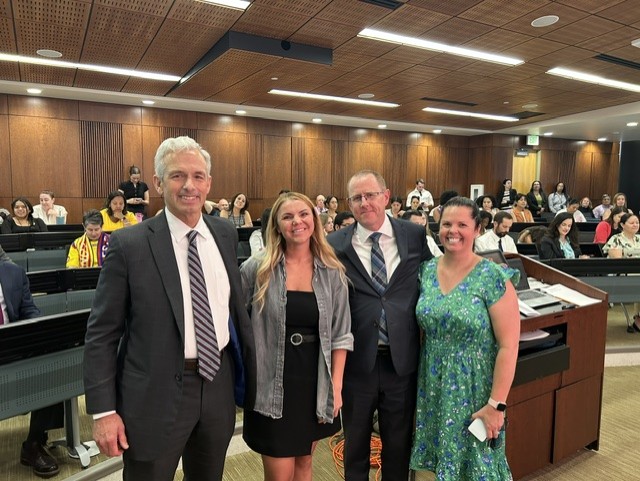
One of those relationships is with Chris. Both were relatively new in their respective roles when they began working together, and Hollie says their careers crossed paths at just the right time. They shared a vision for what collaboration between DCAC and the District Attorney’s Office could look like and a passion for better serving Denver’s children.
Over the years, that partnership has grown to include extensive education, training, consultation, and collaboration between their teams.
“You can’t build trust during the emergency,” Hollie says. “Trust is built over coffee on a Tuesday.”
It’s a philosophy she has put into practice throughout Denver’s multidisciplinary team.
Chris calls DCAC’s Rapid Response Team “the cornerstone” of the MDT and says Hollie has been indispensable in bringing partner agencies together and continually pushing them to improve.
“If I had to select the one person most responsible for the progress the entire MDT has made in the past five years, it would be her,” he says, “and that progress has meant better investigations, better cases, better outcomes, and more justice for the children of Denver.”
He also credits that collaboration with helping strengthen his own office’s response. Denver’s Child Victim Unit, created last summer, brings together prosecutors, victim advocates, and investigators focused specifically on these cases. Working even more closely with Hollie and DCAC, Chris says, has noticeably improved the quality of their prosecutions.
Multiplying the Impact
After 2,000 interviews, Hollie’s focus is increasingly turning toward how she can share what she has learned.
With staffing transitions underway, she is mentoring two DCAC advocates who are being cross-trained as forensic interviewers and will support them closely through their first months in the interview room. Prioritizing their training may mean temporarily setting aside some of her own passion projects, but Hollie sees it as an investment in her team, DCAC, and Denver’s children.
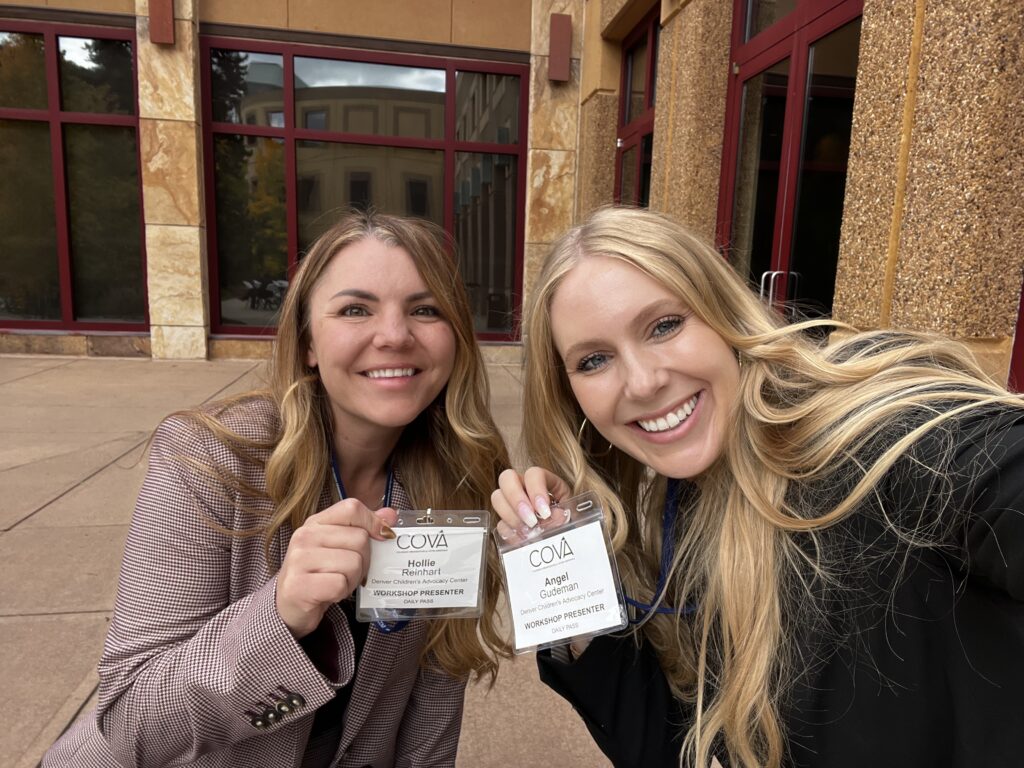
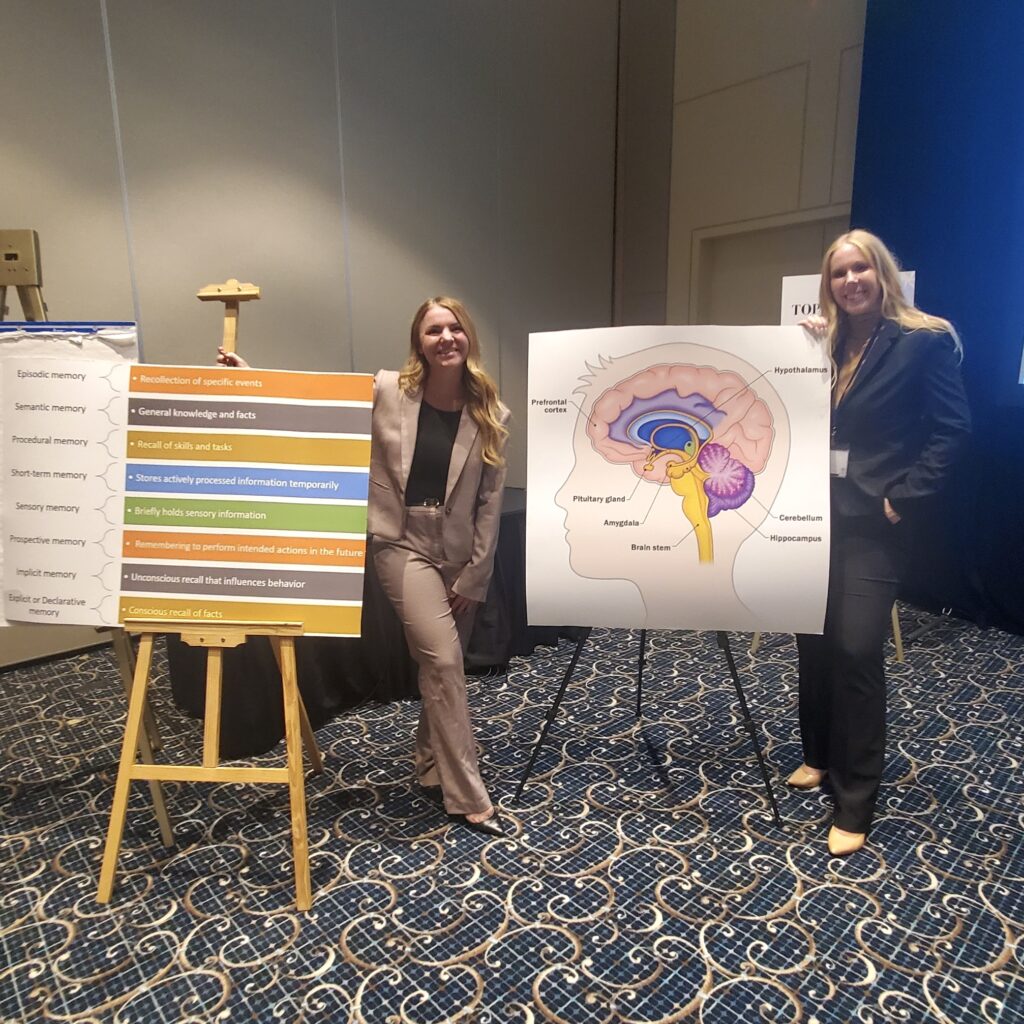
She also trains new forensic interviewers across Colorado through the Colorado Children’s Alliance and regularly provides training and education to Denver’s multidisciplinary partners.
One area is particularly close to her heart: working with very young children. Before becoming a forensic interviewer, Hollie worked in a therapeutic preschool, where she developed social-emotional curriculum. Today, preschool forensic interviewing has become one of her areas of specialization.
She is continuing to develop a forensic interview workshop focused on preschool-aged children, collaborating with practitioners from Colorado, Georgia, Minnesota, and Alaska to refine the practice. Additional trainings are planned through the Colorado Children’s Alliance and for national audiences.
“As I phase out my actual time spent in the interview room, that’s where I want my time to be spent: on protocol development and training,” Hollie says.
For Hollie, training is also a way of continually challenging herself. It requires her to stay current on research, question her own practices, and make sure she’s practicing what she teaches.
The goal is not simply to make more forensic interviewers. It’s to make the entire field better.
Building the Next Era of DCAC
Perhaps nowhere is the impact of those years of relationship-building more visible than in what comes next.
Hollie has been deeply involved in the planning and design of DCAC’s new Children’s Justice Center – an expansion that will bring multidisciplinary partners together in a child-friendly environment and create new opportunities for coordination, training, and collaboration.
For Hollie, the new center represents much more than a building. It’s the next era of DCAC.
After years of strengthening relationships across agencies, she sees an opportunity to bring that collaboration into a space intentionally designed around the needs of children and families.
“The conversation is always about the children and families first,” she says, down to details like choosing the softest carpet and the warmest lighting.
Hollie believes DCAC has long provided an exceptionally high-quality service. The new center is an opportunity to pair that work with a facility that reflects the same level of care and to strengthen a multidisciplinary team that is already working together better than ever.
There are also bigger aspirations ahead: continuing to establish DCAC as a leader in forensic interviewing, developing specialized expertise around preschool cases, expanding professional training, and sharing Denver’s practices with professionals across Colorado and the country.
Ultimately, though, Hollie’s vision comes back to the same place her career began: the child sitting across from an interviewer.
“There are so many outcomes that can play out for a family after they leave our space,” she says. “The courtroom isn’t healing for everyone. That’s not justice for everyone.”
DCAC, she hopes, can be the starting point for whatever healing, closure, or justice looks like for that individual child and family, and a place they know they can return to for support along the way.
After 2,000 interviews, more than 100 appearances on the witness stand, countless trainings, and years spent bringing people and agencies together, Hollie’s impact is increasingly difficult to measure with numbers alone.
Chris calls her an “unsung hero.”
“The number of children and families who are better off today and healing from their trauma as a direct result of her efforts over the years is incalculable,” he says. “I can personally say she has been an inspiration to me, and working with her over the last several years has unquestionably made me better at what I do.”
And perhaps that is the real milestone: not simply the 2,000 children Hollie has personally interviewed, but the system she has helped build around them: stronger interviewers, stronger partnerships, stronger practices, and, soon, a new center designed to carry that work forward for the next generation of Denver’s children.